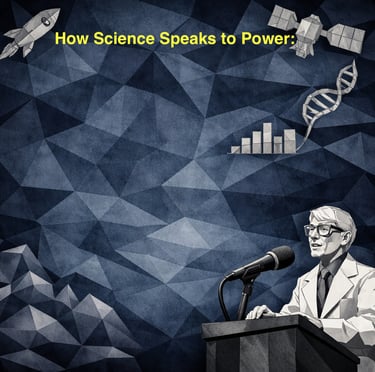
How Science Speaks to Power
Your guide to decode what is said, why, and by whom when science is used in debate on policy.

Often science input to policymaking is incorporated without prejudice and is not contested. But sometimes not.
Why, and how can good science fail to inform good policy?
We take a case study approach to explore how advocates in policymaking- the public, scientists, lobbyists, industry and governments can act to distort, silence or amplify the impact of relevant science during policymaking.
Hosted by Roger Jacobs and McMaster University undergraduates. Episode links are below:
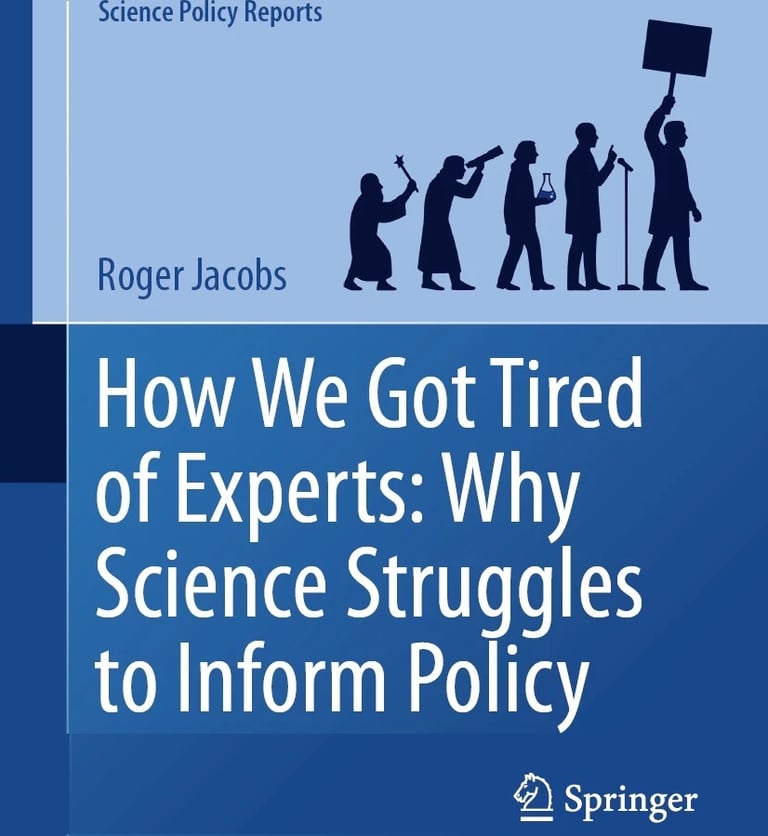
Science is losing its privileged place in informing the public and government on policy. It is increasingly captured by special interests that employ many strategies -some without intent- that bias policymaking.
This book first explores the history and changing values of science, and then, employs case studies to document the strategies that politicize science and scientize politics.
You'll learn how advocates miscommunicate uncertainty, apply too much or too little criticism, exclude specific experts, and manage risk or precaution.
Sometime science in the news is not what it seems to be.
Science in the media can try to close a debate: "The Science is Settled", or use one issue (Asthma from gas stoves) to promote another (reducing carbon footprint).
As stories emerge, I'll trigger discussion of the events.
The PODCAST


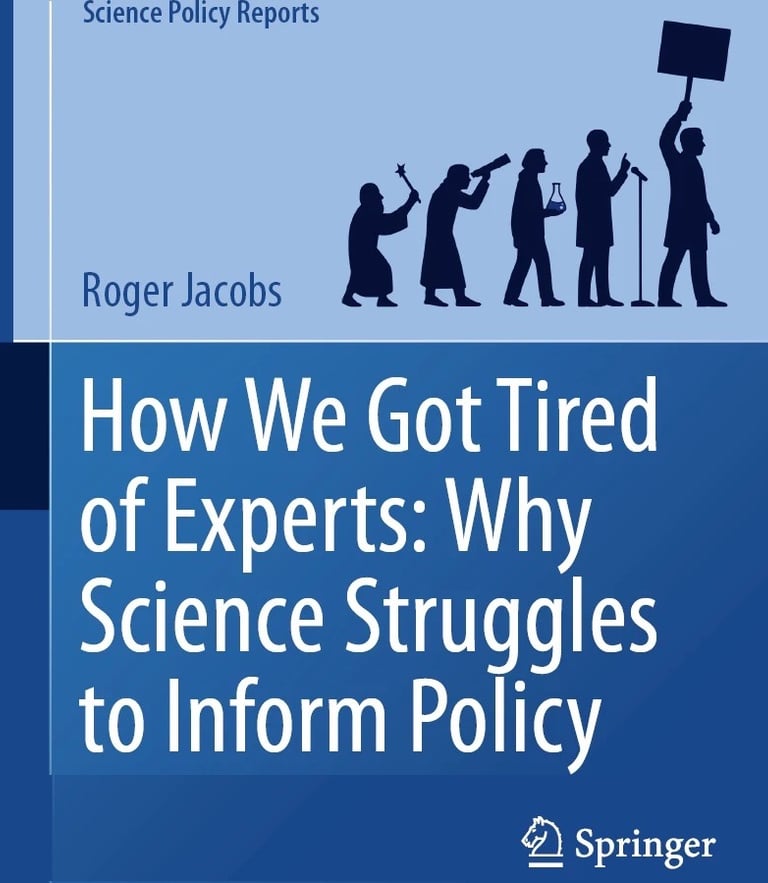
The BOOK
NOW...
Episodes
Trailer
About Roger Jacobs
Roger Jacobs, PhD is a scientist and professor of developmental genetics at McMaster University in Canada. He has published over 60 research papers. His work applies the fruitfly genetic model to reveal the role of glial cells in the development of the nervous system. He also studies heart development and growth in the fruitfly.
He is also an innovative educator, having obtained competitive funding to develop and implement novel active learning curricula in five new courses on the scientific method, introductory molecular biology, science communication, and the course upon which this book is based—pedagogical use of case studies of how science speaks to power.
Roger developed an interest in Science for Policy in the 1990’s – years of the Kyoto Protocol, the first GMO foods, cloning of Dolly the sheep, GPS and the internet. From his Drosophila lab, he wondered why good science did not compel action and weak science might be accepted uncritically. Why was there no way to correct mis-representations of science and why were new scientific discoveries converted into technologies without informed risk management?
Being both a scientist and educator, he realised that the best way to learn the subject, and to learn from others, was to teach. Roger read for years- and wrote a paper on the Montreal Protocol. Eventually he was able to convince his Dean (thanks, Maureen) that it would be good for everyone if he could both research and teach “How Science Speaks to Power” to senior students in McMaster’s flagship interdisciplinary program, Arts and Science. There was no textbook written by or for readers with an interest in science, but a lot of scholarship in the humanities that most scientists are unaware of. This website, book and podcasts apply the framework Roger developed to interpret and decipher cause and effect across any kind of science for policy arena. Although conceived for science trainees, those in other disciplines should find this different perspective interesting.